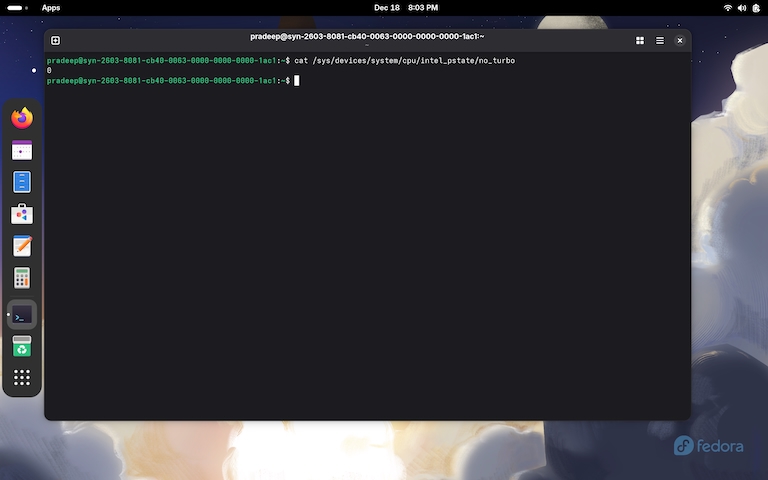
Enable Turbo Mode to Utilize Full CPU Speed on Linux
December 17, 2025
Learn how to unlock your CPU's turbo mode on Linux Fedora to access full processor performance, tested on Fedora 43 with Lenovo Ideapad laptops.
Explore the latest trends and best practices shaping web development in 2025, from advanced frameworks to performance optimization techniques.

The web development landscape continues to evolve at a rapid pace. As we move through 2025, several key trends and best practices have emerged that are reshaping how we build for the web. This post explores the most significant developments and provides practical insights for implementing them in your projects.
One of the most significant shifts in recent years has been the adoption of partial hydration frameworks like Astro, Qwik, and the latest versions of Next.js. These frameworks allow developers to ship only the JavaScript necessary for interactivity, resulting in dramatically improved performance metrics.
// Example of Astro's island architecture
---
import InteractiveCounter from '../components/InteractiveCounter.jsx';
---

<html>
  <body>
    <h1>Welcome to my site!</h1>

    <!-- Only this component will ship JavaScript -->
    <InteractiveCounter client:visible />

    <!-- The rest of the page is static HTML -->
    <p>This is static content that requires no JavaScript.</p>
  </body>
</html>
The key advantage here is that you can build pages with rich interactivity while still delivering excellent performance. Only the interactive components (or “islands”) load JavaScript, while the rest of the page remains lightweight HTML and CSS.
Edge computing has moved from an experimental feature to a mainstream approach for delivering web applications. By running code closer to users, edge functions provide:
Major platforms now offer integrated edge solutions that make deployment straightforward:
// Example of a Cloudflare Worker
export default {
  async fetch(request, env) {
    const url = new URL(request.url);

    // Dynamic content generation at the edge
    if (url.pathname.startsWith("/api/")) {
      return handleApiRequest(request, env);
    }

    // Serve static content with edge-side personalization
    const country = request.headers.get("cf-ipcountry");
    return new Response(
      `<html><body>Hello visitor from ${country}!</body></html>`,
      { headers: { "Content-Type": "text/html" } }
    );
  }
};After years of promise, Web Components have reached maturity with broad browser support and improved developer tooling. The combination of Custom Elements, Shadow DOM, and HTML Templates now provides a standardized way to create reusable components.
// A simple web component
class UserProfile extends HTMLElement {
  constructor() {
    super();
    this.attachShadow({ mode: "open" });
  }

  connectedCallback() {
    const user = JSON.parse(this.getAttribute("user-data"));
    this.shadowRoot.innerHTML = `
      <style>
        .profile { border: 1px solid #ccc; padding: 1rem; }
        h2 { color: #333; }
      </style>
      <div class="profile">
        <h2>${user.name}</h2>
        <p>${user.bio}</p>
      </div>
    `;
  }
}

customElements.define("user-profile", UserProfile);
The key advantage is that these components work across any framework—or no framework at all—making them ideal for design systems and shared component libraries.
Performance has shifted from a nice-to-have to a core business metric. With Google’s Core Web Vitals impacting SEO rankings and user experience directly tied to conversion rates, organizations are prioritizing performance optimization.
Key practices include:
Responsive images with modern formats
<picture>
  <source srcset="/images/hero.avif" type="image/avif" />
  <source srcset="/images/hero.webp" type="image/webp" />
  <img
    src="/images/hero.jpg"
    alt="Hero image"
    width="1200"
    height="600"
    loading="lazy"
  />
</picture>
Font optimization with size-adjust and fallbacks
/* Using the new 2025 font APIs */
@font-face {
  font-family: "MyFont";
  src: url("/fonts/myfont.woff2") format("woff2");
  font-display: swap;
  size-adjust: 97%;
  font-synthesis-weight: none;
}
JavaScript optimization with fine-grained chunking
// Modern bundler configuration
export default {
  output: {
    manualChunks(id) {
      if (id.includes("node_modules")) {
        // Create separate chunks for large dependencies
        if (id.includes("chart.js")) {
          return "charts";
        }
        if (id.includes("date-fns")) {
          return "dates";
        }
        return "vendor";
      }
    }
  }
};
Accessibility has finally become a default requirement rather than an afterthought. This shift is driven by a combination of legal requirements, broader awareness, and improved tooling.
Best practices now include:
// Example of a responsive, accessible dialog component
function Dialog({ isOpen, onClose, title, children }) {
  // Close on Escape key
  useEffect(() => {
    if (!isOpen) return;

    const handleEscape = (e) => {
      if (e.key === "Escape") onClose();
    };

    window.addEventListener("keydown", handleEscape);
    return () => window.removeEventListener("keydown", handleEscape);
  }, [isOpen, onClose]);

  // Trap focus within dialog when open
  const dialogRef = useRef(null);

  useEffect(() => {
    if (!isOpen) return;

    const dialog = dialogRef.current;
    const focusableElements = dialog.querySelectorAll(
      'button, [href], input, select, textarea, [tabindex]:not([tabindex="-1"])'
    );

    // Focus trap implementation
    // ...
  }, [isOpen]);

  if (!isOpen) return null;

  return (
    <div className="dialog-overlay" onClick={onClose} role="presentation">
      <div
        ref={dialogRef}
        className="dialog"
        role="dialog"
        aria-modal="true"
        aria-labelledby="dialog-title"
        onClick={(e) => e.stopPropagation()}
      >
        <h2 id="dialog-title">{title}</h2>
        <div>{children}</div>
        <button
          className="close-button"
          onClick={onClose}
          aria-label="Close dialog"
        >
          ×
        </button>
      </div>
    </div>
  );
}The web development landscape of 2025 emphasizes performance, accessibility, and improved developer experience. By adopting these trends and best practices, you can create websites and applications that not only meet current standards but are also positioned for future advancements.
As always, the key is to focus on user needs first, while leveraging these modern techniques to deliver the best possible experience. The tools and approaches may change, but the goal remains the same: building fast, accessible, and engaging web experiences.
What trends are you most excited about implementing in your projects? Let me know in the comments below!
December 17, 2025
Learn how to unlock your CPU's turbo mode on Linux Fedora to access full processor performance, tested on Fedora 43 with Lenovo Ideapad laptops.

October 15, 2025
Learn about prompt poisoning attacks in AI systems and practical strategies to secure your applications from hidden malicious instructions.